2026
House
A private AI companion I built for my mom. The brain is a local Gemma model running on a machine in my closet, so her notes and reminders never touch the cloud. It teaches her the PARA note-taking method instead of making her dependent on it.

The problem
My mom wanted to use AI. The problem is that the AI everyone hands her is not built for her. It is sycophantic, it hedges, it lectures her about supplements, and it forgets her between sessions. Worse, it makes her dependent on a thing that does not actually know her life.
I did not want her leaning on a chatbot that can't do much for her. I wanted to build her something that makes her better at her own life. So I built House.
What House is
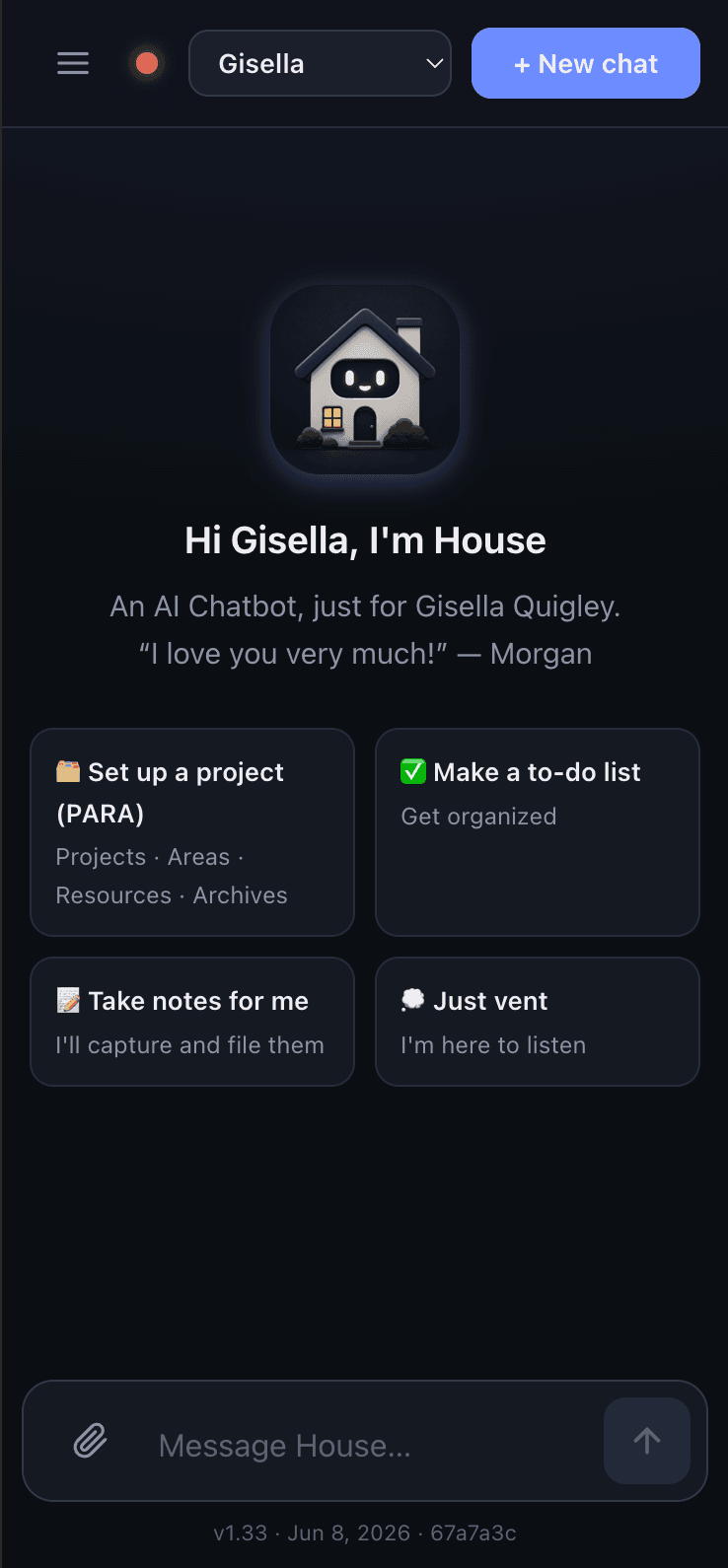
House is a private AI companion I made from scratch for one person. Her name is Gisella. The brain is Google's Gemma model running locally on a machine in my closet through Ollama. The website opens from anywhere, but every answer is generated on my hardware. Nothing she types goes to OpenAI, Anthropic, or Google.
It is warm, honest, and concise. It gives a real opinion. It is the opposite of the "I can't recommend that" experience. And it is built around helping her take notes, not just chat.
The real magic is PARA
The heart of House is not the chat. It is teaching my mom Tiago Forte's PARA method: Projects, Areas, Resources, Archives, plus a daily log. House files her notes into those buckets as real markdown files. It nudges her to encode an idea rather than dump it, which is Justin Sung's point about notes that actually stick.
So House is a harness for note-taking. Instead of an AI that develops itself, this one develops my mom's ability to organize her own thinking. She can point Obsidian at the same folder and read everything House wrote with her.
Every person lives in one folder of plain files. Here is the shape of it.
📁 House · profiles/ · the private second brain (local files, never the cloud)
- <person>/one folder per person (here, your mom)
- <person>.mdtheir profile: who they are, how House talks to them
- data.jsonlists, reminders, daily-log data
- Complaints.mdthe "complaint button" feedback, gathered over time
- Chats/one .md per conversation thread
- <chat-id>.mda single chat thread
- Deleted Chats/soft-deleted chats. Moved, never destroyed.
- Memory/rolled-up memory of past chats
- Weekly/weekly rollups
- Monthly/monthly rollups
- Notes/her second brain, PARA-organized
- Projects/active efforts with a finish line
- Areas/ongoing parts of life (Health, Home, Family, Finance)
- Resources/reference she keeps (articles, guides, links)
- Archives/finished or set-aside items
- Daily Log/one entry per day
- YYYY-MM-DD.mda single day's entry
- Deleted/soft-deleted notes land here
How to read it: every person gets one folder of plain Markdown. Profile, chats, rolled-up memory, and PARA notes (Projects · Areas · Resources · Archives). Nothing is ever hard-deleted, it is moved to a Deleted/ folder. All of it lives on the Mac, never the cloud.
How it works
Three pieces, kept deliberately simple.
- The website is one static page on Vercel, behind a password. It never talks to the AI directly and never reads her files. It only says who is talking.
- Firebase is a relay and nothing else. A message passes through it while a reply is being generated, then it is deleted. No profiles, no notes, no memory live there.
- The bridge is an always-running process on my Mac. It watches for jobs, calls the local Gemma, streams answers back, and reads and writes all of her private files. It only makes outbound connections, so there is no open door into my house.
All of her personal data lives in plain files on the Mac under her name, gitignored, never in the cloud. The browser can't see them. Only the bridge can.
The complaints loop
This is my favorite part. My mom can file a complaint any time during the week. "House was too wordy." "He keeps bringing up that old thing."
Every weekend, those complaints get handed to the most powerful Claude model, which reads them and writes me a report: here are the problems, here is what I suggest. I can approve a fix on the spot, pick the best option, or wait until I am home and build it myself. Then the change ships to her instantly, because I control the whole stack.
So House gets better every week, tuned by the actual person using it, without her ever having to learn how any of it works.
What it can do
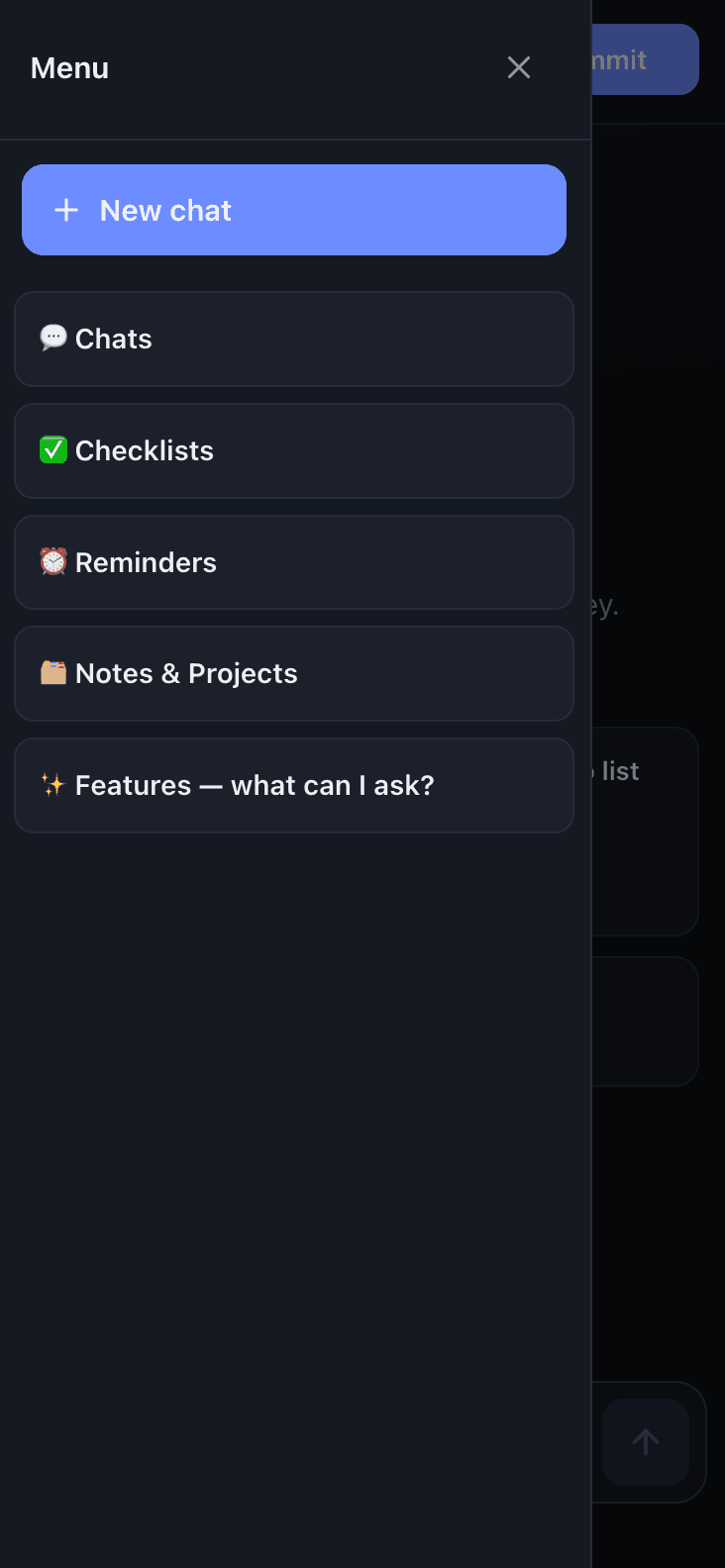
- Lists, reminders, and a daily log she can talk to or tap.
- A full PARA notes editor backed by real markdown files.
- A proactive check-in once a day, greeting her first.
- Health and supplement advice that uses her actual regimen and never moralizes.
- Images, because Gemma is multimodal. Voice out on her phone.
- Custom tools I can build for her specific use case and push instantly.
Role and stack
Designed, built, and maintained by me, for an audience of one. Stack: Gemma 4 27B on Ollama, a Node bridge, Firebase as a relay, Vercel for hosting, and Claude for the weekend review loop. Plus a whiteboard, Figma, and a lot of time sitting with my mom figuring out what she actually wanted.