2026
Jeffy
A robot I see through with a Quest 3. Two cameras for eyes, a 3D printed head that turns when mine does, and a hoverboard waiting to become its legs. Still being built.
Part 1Now
Head
3 of 6 done
- Vision (done)
- 3 axis movement (done)
- Speaker out (not yet)
- Directional mic in (not yet)
- Quest controlled (done)
- AI personality when not under direct control (not yet)
Part 2
Body
- Balance (not yet)
- Direct control (not yet)
- AI control (not yet)
- Voice assisted commands (not yet)
Later
Stretch goals
- Arm (not yet)
- Lidar mapping (not yet)
- Home hub controller (not yet)
- Google Home substitute (not yet)
- Self charging (not yet)
- Legs + wheels (not yet)
- Goal
- A robot I drive and see through with a Quest 3. No router, no internet, no computer in between
- Role
- Solo build. Hardware, software and the web side
- Tools
- Jetson Orin Nano, Quest 3, WebXR, WebRTC, Blender, Python, an Ender 3
- Timeline
- 2026, still building
Results
- 57 fps stereo
- 2560 x 720, one camera per eye, on a board with no hardware video encoder
- 3 axis head
- nods, tilts and turns with mine, with both camera ribbons running through the middle
- Under 0.1 s
- to recognise a spoken sentence, running on the robot
- Part 1 of 2
- the head sees and moves. Then the body, then the stretch goals
Overview
I'm building a robot named Jeffy. He's knee height, he'll balance on two hoverboard wheels, and I see through his eyes with a Quest 3. When I turn my head, he turns his.
The headset connects straight to the robot's own Wi-Fi. There's no router, no internet and no laptop in the loop. If I carry him into a field, he still works.
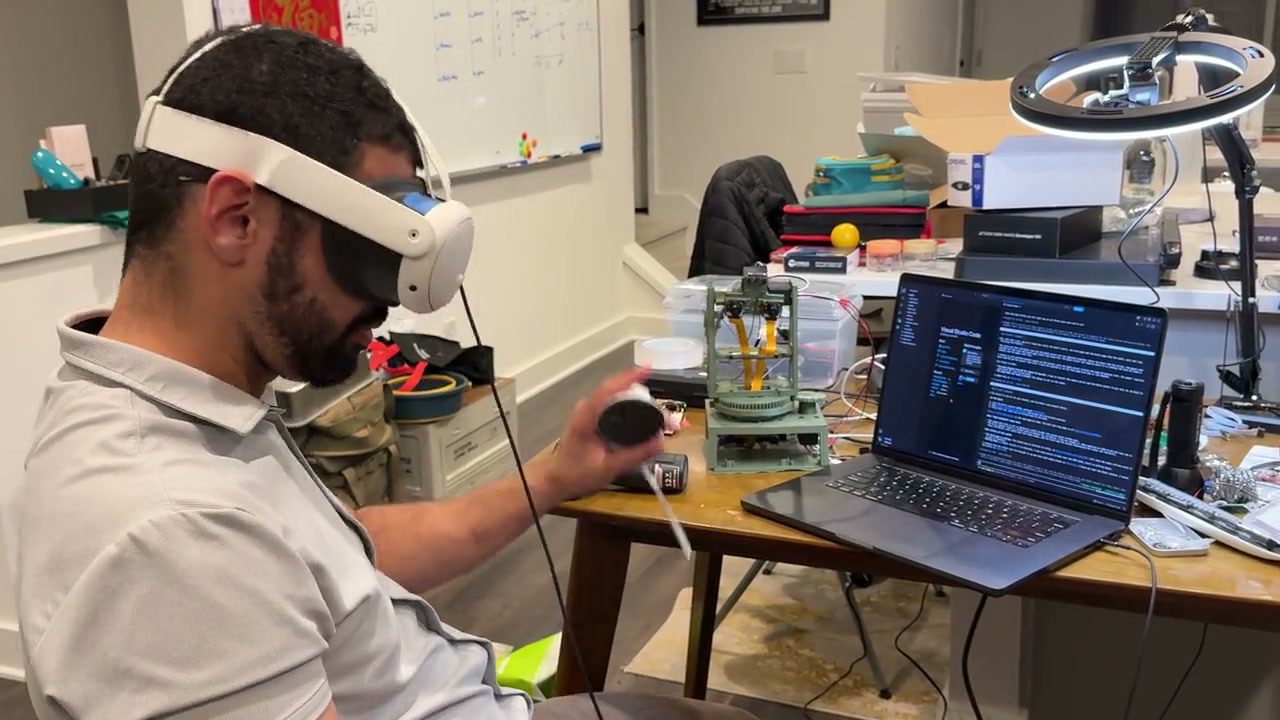
He's a head on a desk right now. The video above is that head following mine.
Part 1
The head
The build goes head first, then body. I'm still in part one. It has three sides: the hardware, the software that runs on him, and the web connection that lets me reach him from anywhere.
Open one to see why I built it that way.
Hardware
Cheap and replaceable for prototyping
 OpenClose
Hardware
Cheap and replaceable for prototyping
This is my first robot and I expected to break things. So every part is either cheap or something I can print again overnight.
I set a few rules before any parts showed up.
- Brain and reflexes are separate. A Jetson Orin Nano does the seeing and thinking. A small ESP32 board will do the balancing. The Jetson runs Linux, which can't promise exact timing, and a balancing robot falls over when the timing slips. The speed limits live on the ESP32 too, so they hold even if the Jetson crashes.
- He works alone. A laptop nearby is an optional boost, never a requirement.
- A used hoverboard is the drive base. Cheap parts I can break and replace while I'm still figuring things out.
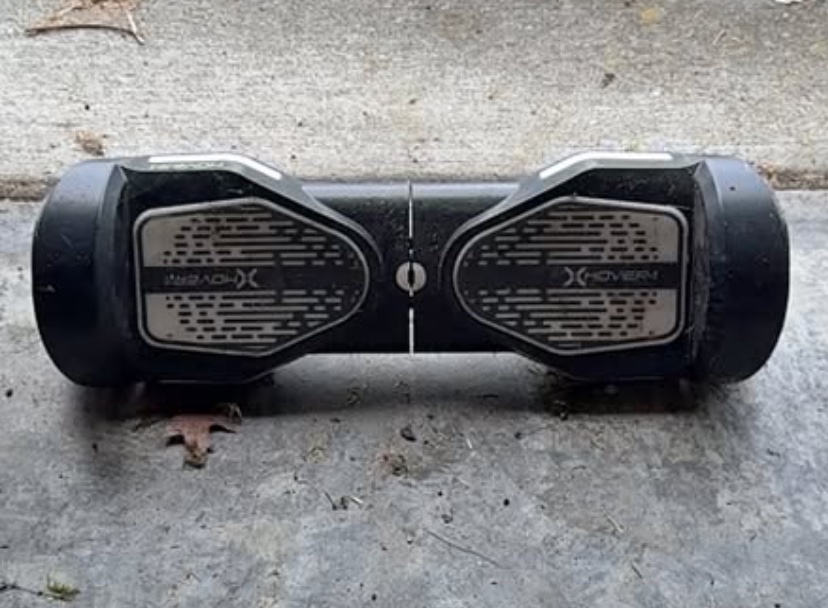
A $15 hoverboard
The drive base came from Goodwill. A used hoverboard, $15, no charger. I took it apart for the parts a robot needs most.
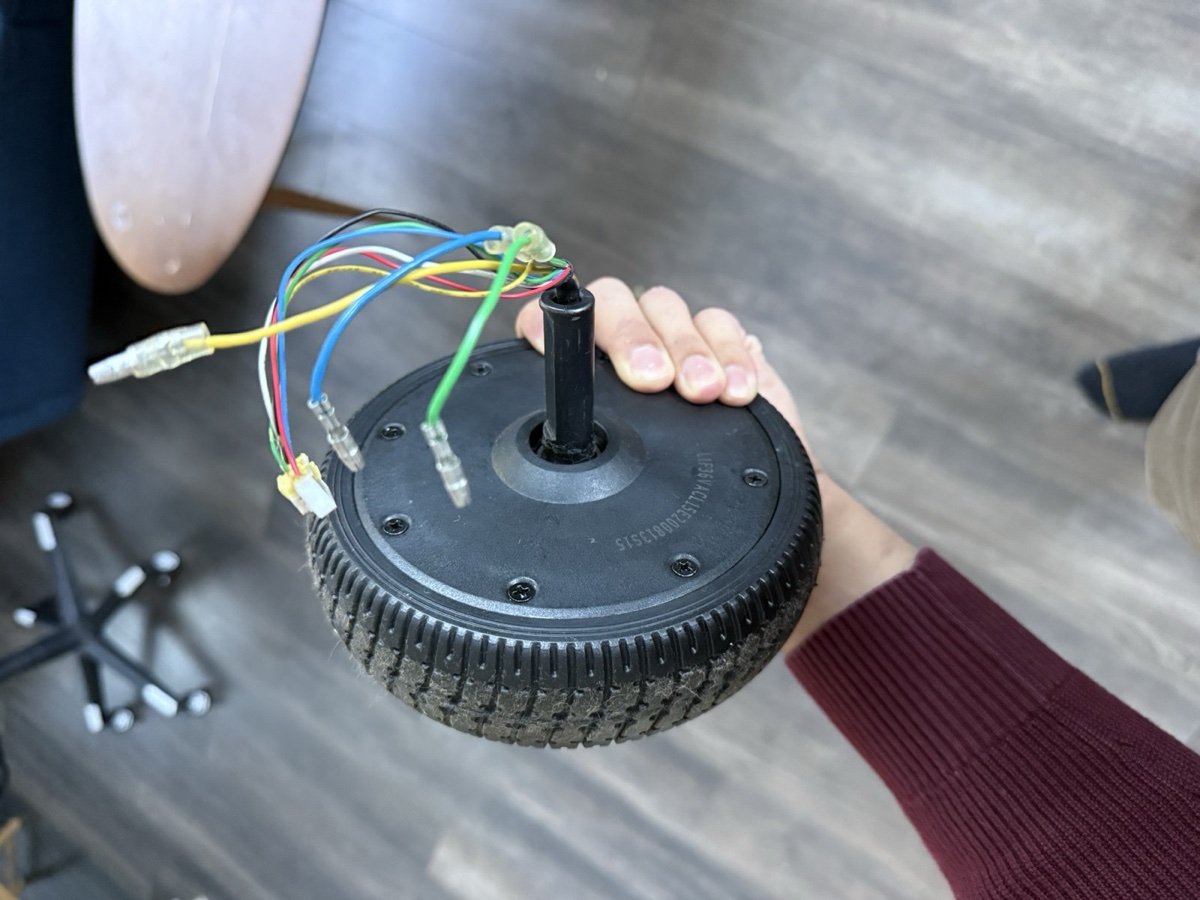
Two wheel motors
Brushless motors with the tires already on.
New about $60
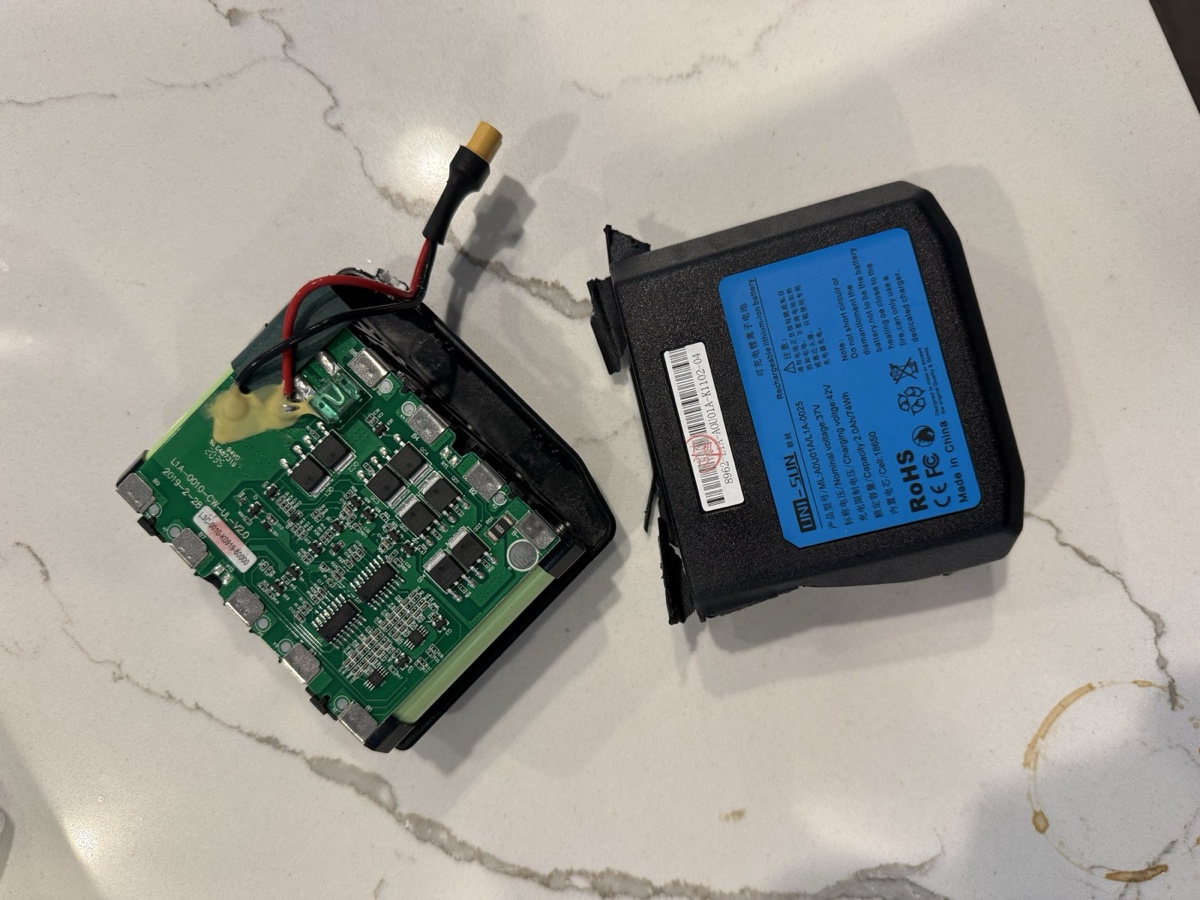
The battery
A 37 V lithium pack, 74 Wh.
New about $50
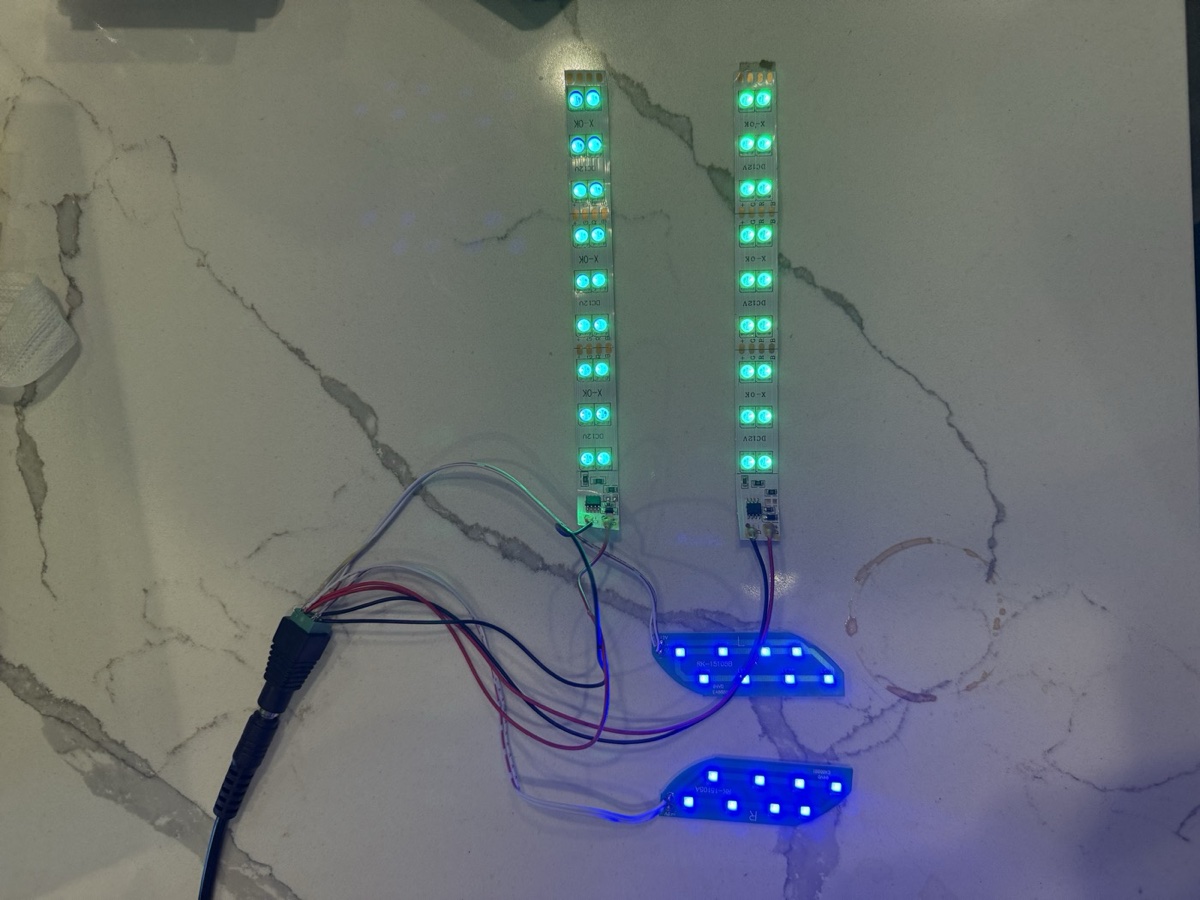
The lights
Two 12 V strips and both footpad boards. All four light up.
New about $10
- I paid
- $15
- one used hoverboard
- Would cost
- $120
- roughly, buying the same parts new
The hoverboard's own axle clamps will hold the wheels on the new base. Its circuit boards are the only part I'm not using.
Designing around the ribbon cables
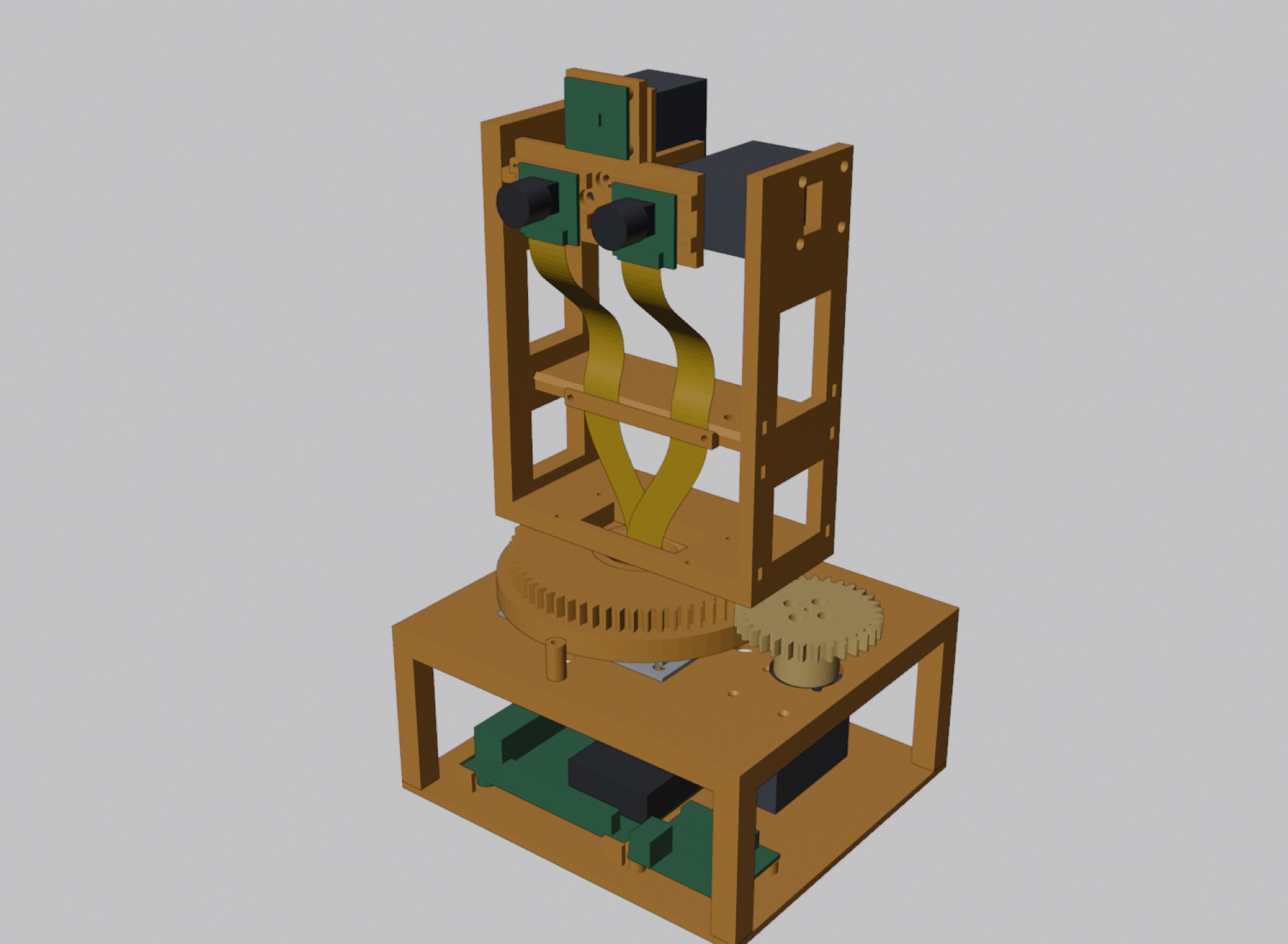
The head has to move a lot. It turns 60 degrees each way, nods 60 and tilts 35, because it copies whatever my head does. And it carries two cameras, each on a flat ribbon cable that has to reach the Jetson at the bottom.
Ribbon cables hate this. They're 300 mm long, they bend one way only, and a sharp fold or a snag kills the picture. So the ribbons ended up deciding the layout of the whole head.
The first layout put the turn servo right on the turning axis, with the ribbons looping around the outside. That loop needed 80 mm of slack swinging around the head every time it turned.
So I moved the servo off to the side. It drives the head through a printed 2:1 gear pair, which leaves the middle of the bearing open. Both ribbons now run straight up the turning axis, the one place that barely moves when the head turns. They twist a little and never sweep.
From there it was details. A sharp edge where the ribbons twist got rounded. The path came out at 281 mm of the 300 I have. I checked the head across 60 poses to make sure nothing collides anywhere in its range.
I also set a rule: as few screw types as possible, Torx drive, from two kits I picked. The design had to change to fit the rule, not the shopping list. Three parts got redrawn so nothing needs a screw from outside the kits.
What assembly found
Putting the printed head together found things the drawing couldn't have shown.
- The real servo has a hump. There's a raised bump on its shaft face that the model didn't have. The cradle had no room for it, so I carved a groove by hand. The next version has a pocket.
- Screw heads blocked the camera plate from turning. They now sit below the surface.
- The Jetson is 102 x 90 mm, not the 100 x 79 on the datasheet. That number is the bare board. The tray was too tight.
- The deck sat too low over the Jetson. The legs are now separate posts, so I can change the height by reprinting four small posts and not the whole deck.
- Printed gears have slack. I soldered a tilt sensor onto the camera plate so the Jetson knows the head's true angle, 50 times a second.
Software
72 FPS binocular vision
 OpenClose
Software
72 FPS binocular vision
I wanted to drive him and see through him with a Quest, with as little delay as possible.
- Built in WebXR so any Quest can connect. The Jetson serves the software as a web page. Join his Wi-Fi, open the browser, and you're in. Nothing to install.
- A direct connection for low latency. The Jetson hosts its own Wi-Fi network. Video goes straight from the robot to the headset and never touches the internet, so it never has to go to space.
The first test
The first test was the whole idea in miniature. Put a camera on the Jetson, have the Jetson host its own Wi-Fi, join it from the Quest, and look.
It worked. A webcam showed up as a video panel floating in my room that I could grab and move around. The Wi-Fi network was called Jeffy. The name stuck.
Two eyes
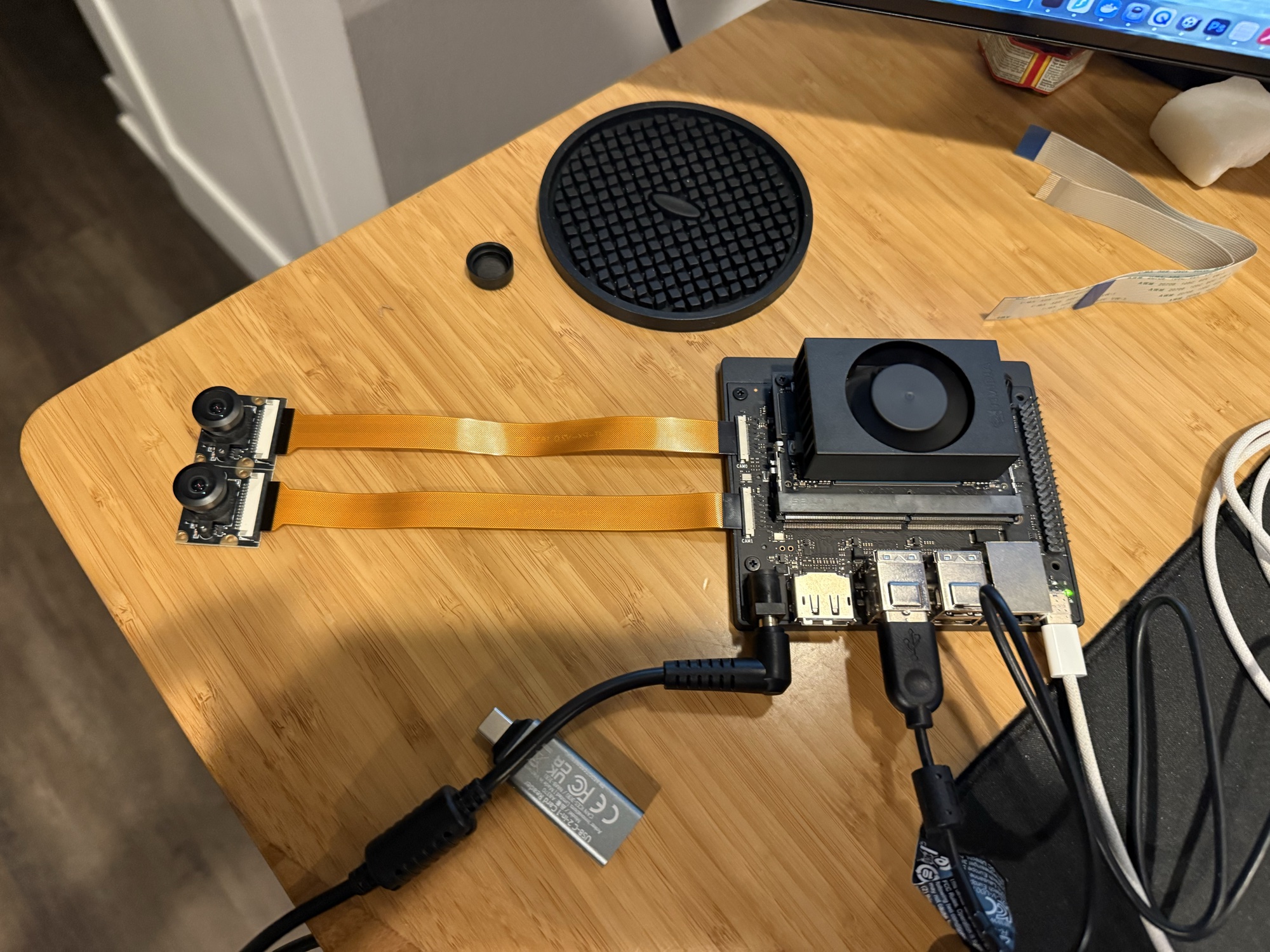
Then the real cameras went in. Both stream side by side as one 2560 x 720 picture at about 57 frames a second. In VR each eye gets its own camera, so the room has depth.
This Jetson has no hardware video encoder, so all of that is compressed in software. It still holds the frame rate.
The view has a settings menu inside the headset: which cameras, resolution, frame rate, whether the picture is fixed in the room or locked to my head, and a check for lining up the two eyes.
It follows my head
Before the head was printed, the three servos were already working loose on the desk, wired to the headset's pose. I put the Quest on and looked around. So did he.
Then I drew him a face.
Senses
- Look back. Left alone, he looks around, finds a face, follows it with all three servos, and copies the tilt of your head.
- Hearing. The first try answered everything with nonsense, so I wiped it and started over. Now he knows when he's being spoken to, and he nods when he hears you. A language model that answered well took 5 of the Jetson's 8 GB and the cameras couldn't start next to it. I picked the cameras. He doesn't have to talk back.
- A hello label. Say "Hi Jeffy, my name is" and your name, and a thermal printer across the room prints you a label.
Web connection
Testing and visualizing to help design
 OpenClose
Web connection
Testing and visualizing to help design
Testing every small change in a headset is slow, and from inside it I can't see what the head is doing. So I built a web page for testing. It aims the head and shows what he sees, from any browser. Live video goes straight from the robot to the viewer, like a video call.
The page has a 3D model of the head that moves with the real one, so I can see the pose he thinks he's in next to the picture he's sending. You drag a ball around a sphere to turn and nod, and a ring to tilt. On a phone you can steer by tilting it. Guests get a password, a view and a couple of buttons. I get every setting.
Good bugs
- Pictures arrived minutes late. Over a slow connection, still pictures queued up and viewers watched the past. Now each viewer only gets the newest one.
- The picture slid around as the head moved. The page assumed a flat 75 degree lens. Turning the head a known angle and matching points between two pictures showed it's a fisheye, 92 degrees across. Laid out that way, the picture stays put.
- The picture swung ahead of the head. Each picture is now drawn at the pose the head really had when it was captured, a quarter of a second earlier.
Where it's going
Part two is the body. He gets power, two hoverboard wheels and the balance to stand on them. Then I drive him, then he drives himself.
The goal hasn't changed. A robot I drive and see through with my Quest 3, connected straight to him. No router, no internet, no computer in between.
Like what you see?