2025
Co-located Pokémon
Two Quest 3s in the same room, two trainers, one shared spatial battlefield. Built mostly to find out whether the magic actually works.
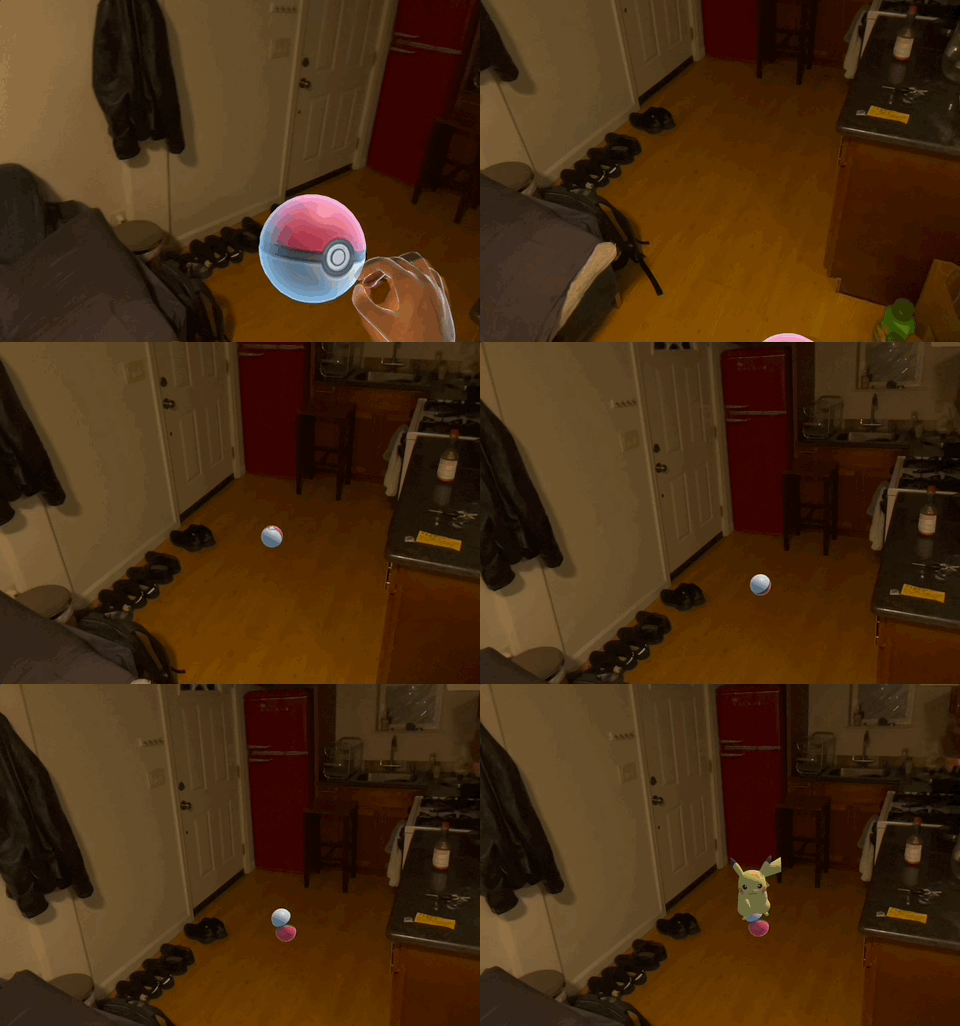
The setup
A few of us were arguing about whether the co-located AVP tech we were seeing in Unity could actually deliver: two headsets, one shared spatial state, no jankiness. Co-location is one of those features that demos great on a slide and falls apart in a real room. We wanted to know.
So we picked the corniest possible test case: a Pokémon battle.
What we built
Two Apple Vision Pros in the same room. Two trainers. One shared battlefield in the middle of the floor. The Pokémon stand on it, the attacks resolve in the same physical space for both players, the stomps happen where you'd expect them to happen.
Childhood-aspirational by design. The whole thing was built on the premise that the only way you really evaluate co-located XR is by believing the demo for a second, and we couldn't find a more believable test than the one every kid born in the '90s has already simulated in their head.
What it proved
The technology works. Co-located AVP inside Unity is a real thing you can build with, today, with off-the-shelf libraries and reasonable patience. Whatever we build next under the same banner (non-game, enterprise, collaborative) uses the same stack underneath.
Role and stack
Designer + engineer. Two-person team. Windsurf, Unity, Figma, plus a few other tools depending on what the moment needed.
What it really is
A friendly fiction stretched over an honest stress test. We learned what we needed to learn about the hardware, and we got to play Pokémon in the living room. Both halves of that were the point.